








Ki-demang.com : Candi

Kaca Ngajeng Candhi

ikon-kaca-ngajeng
 

ikon-buku-tamu

candi-prov-yogyakarta

candi-sleman
candi-bantul
candi-gunung-kidul
candi-kulon-progocandi-kota-yogyakarta


 candi-prov-jawa-tengah
candi-klaten
candi-magelang
candi-boyolali
candi-temanggung
candi-kabupaten-semarang
candi-banyumas
candi-wonosobo
candi-kota-semarang
candi-kendal
candi-banjarnegara
candi-batang
candi-pemalang
candi-tegal
candi-brebes
candi-purwodadi
candi-kudus
candi-purworejo
 candi-purbalingga
candi-kebumen

    Jumlah Pengunjung

0463454
  Hari ini     :  Hari ini :117
  Kemarin     :  Kemarin :141
  Minggu ini   :  Minggu ini :253
  Bulan ini   :  Bulan ini :2870
  s/d hari ini   :  s/d hari ini :463454
Pengunjung Online : 12

Kontak Admin.

email-kidemang

12 Sewu

candi sewu wiki01

http://upload.wikimedia.org/wikipedia/commons/e/e0/Sewu_Temple.jpg


candi sewu wiki02

http://upload.wikimedia.org/wikipedia/commons/f/f1/Sewu09_4.jpg


candi sewu wiki03

http://upload.wikimedia.org/wikipedia/id/c/cc/Candi_Sewu.JPG


candi sewu wiki04

http://upload.wikimedia.org/wikipedia/commons/f/f4/Sewu_Aerial_view.jpg


candi sewu pnri01

http://candi.pnri.go.id/jawa_tengah_yogyakarta/sewu/image/SELATAN_05230168.jpg


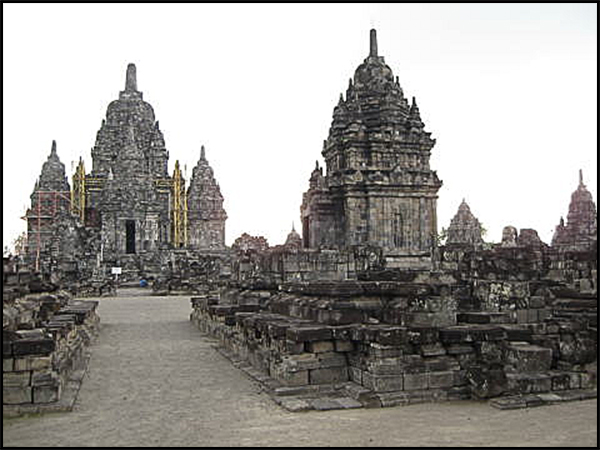
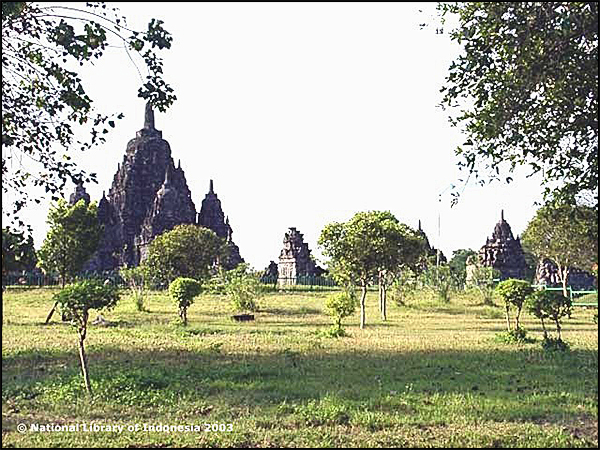
Candi Sewu terletak di Dukuh Bener, Desa Bugisan, Kecamatan Prambanan, Kabupaten Klaten, Propinsi Jawa Tengah. Dari kota Yogyakarta jaraknya sekitar 17 km ke arah Solo. Candi Sewu merupakan gugus candi yang letaknya berdekatan dengan Candi Prambanan, yaitu kurang lebih 800 meter di sebelah selatan arca Rara Jongrang.

Candi ini diperkirakan dibangun pada abad ke-8, atas perintah penguasa Kerajaan Mataram pada masa itu, yaitu Rakai Panangkaran (746-784 M) dan Rakai Pikatan yang beragama Hindu. Walaupun rajanya beragama Hindu, Kerajaan Mataram pada masa mendapat pengaruh kuat dari Wangsa Syailendra yang beragama Buddha. Para ahli menduga bahwa Candi Sewu merupakan pusat kegiatan keagamaan masyarakat beragama Buddha. Dugaan tersebut didasarkan pada isi prasasti batu andesit yang ditemukan di salah satu candi perwara. Prasasti yang ditulis dalam bahasa Melayu Kuno dan berangka tahun 792 Saka tersebut dikenal dengan nama Prasasti Manjusrigrta. Dalam prasasti tersebut diceritakan tentang kegiatan penyempurnaan prasada yang bernama Wajrasana Manjusrigrha pada tahun 714 Saka (792 Masehi). Nama Manjusri juga disebut dalam Prasasti Kelurak tahun 782 Masehi yang ditemukan di dekat Candi Lumbung.

Candi Sewu terletak berdampingan dengan Candi Prambanan, sehingga saat ini Candi Sewu termasuk dalam kawasan wisata Candi Prambanan. Di lingkungan kawasan wisata tersebut juga terdapat Candi Lumbung dan Candi Bubrah. Tidak jauh dari kawasan tersebut terdapat juga beberapa candi lain, yaitu: Candi Gana, sekitar 300 m di sebelah timur, Candi Kulon sekitar 300 m di sebelah barat, dan Candi Lor sekitar 200 m di sebelah utara. Letak candi Sewu, candi Buddha terbesar setelah candi Borobudur, dengan candi Prambanan, yang merupakan candi Hindu, menunjukan bahwa pada masa itu masyarakat beragama Hindu dan masyarakat beragama Buddha hidup berdampingan secara harmonis.

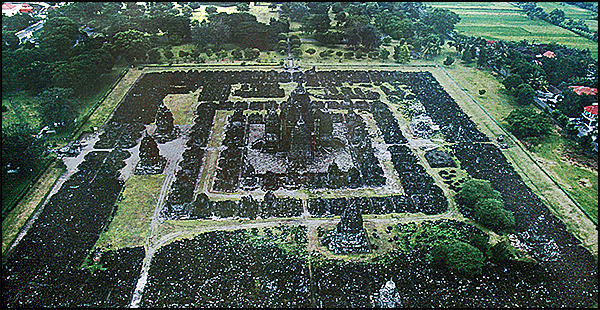
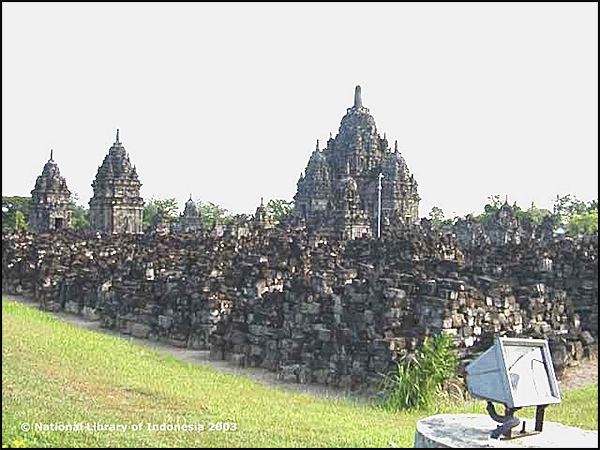
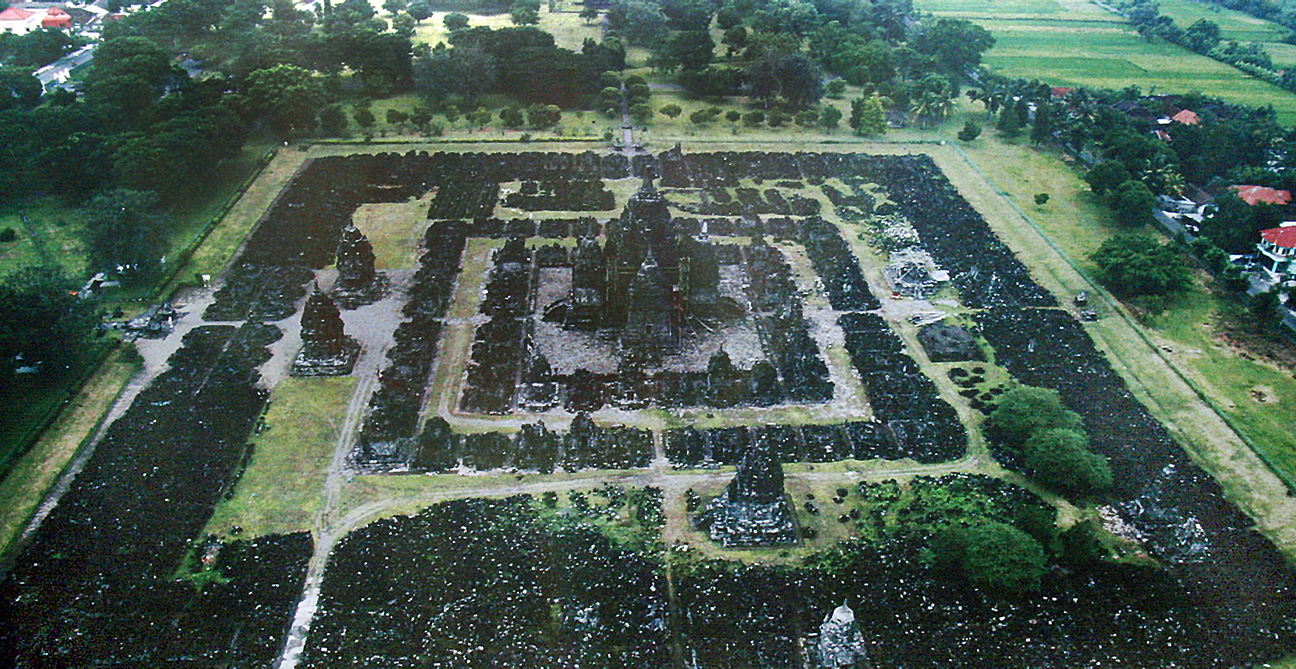
Nama Sewu, yang dalam bahasa Jawa berarti seribu, menunjukkan bahwa candi yang tergabung dalam gugusan Candi Sewu tersebut jumlahnya cukup besar, walaupun sesungguhnya tidak mencapai 1000 buah. Tepatnya, gugusan Candi Sewu terdiri atas 249 buah candi, terdiri atas 1 candi utama, 8 candi pengapit atau candi antara, dan 240 candi perwara. Candi utama terletak di tengah, di ke empat sisinya dikelilingi oleh candi pengapit dan candi perwara dalam susunan yang simetris.


candi sewu pnri02

http://candi.pnri.go.id/jawa_tengah_yogyakarta/sewu/image/SELATAN_05230169.jpg


candi sewu pnri03

http://candi.pnri.go.id/jawa_tengah_yogyakarta/sewu/image/SELATAN_05230171.jpg


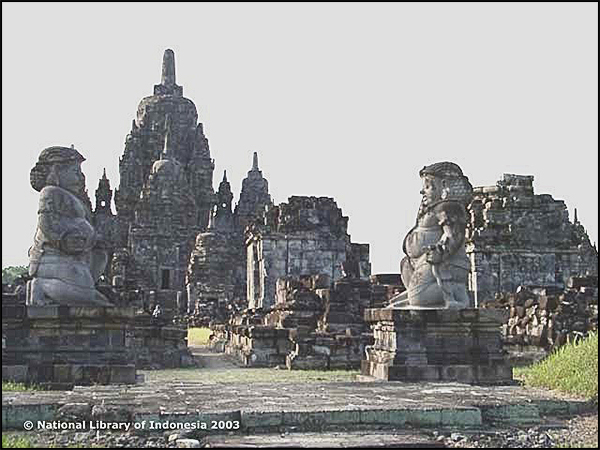
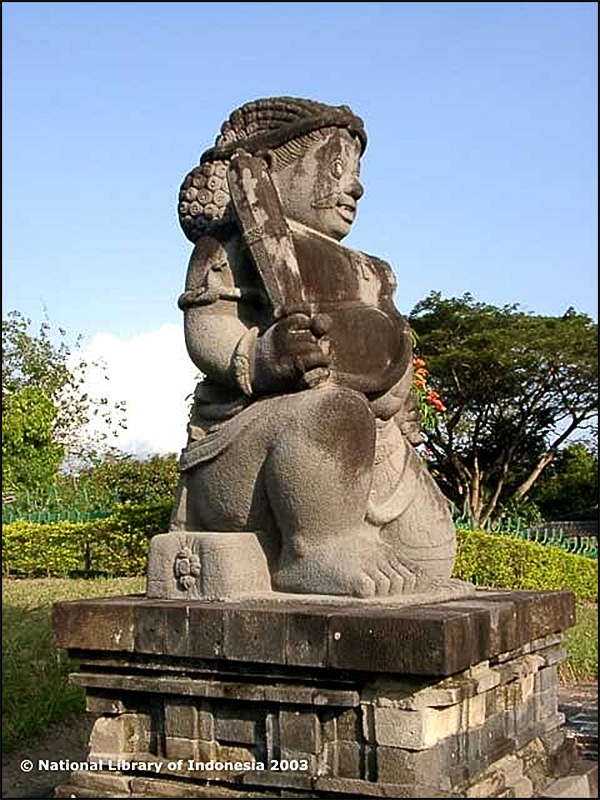
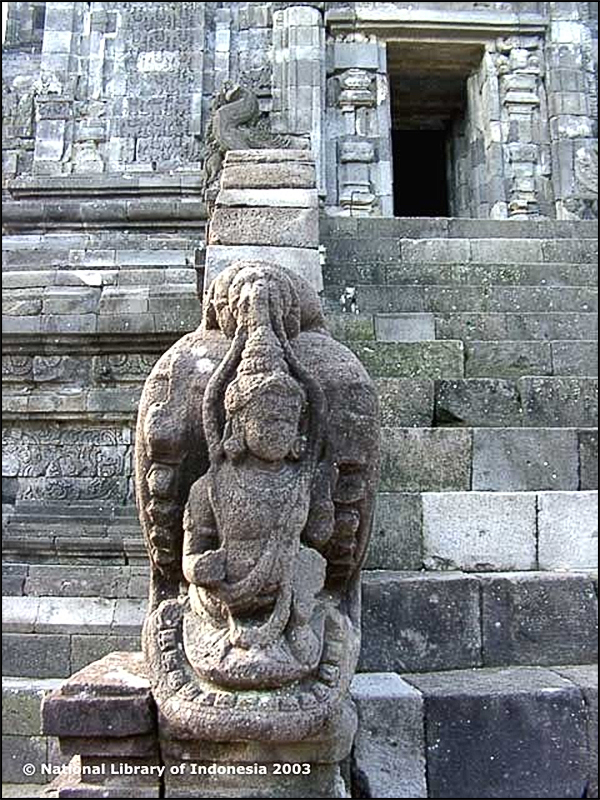
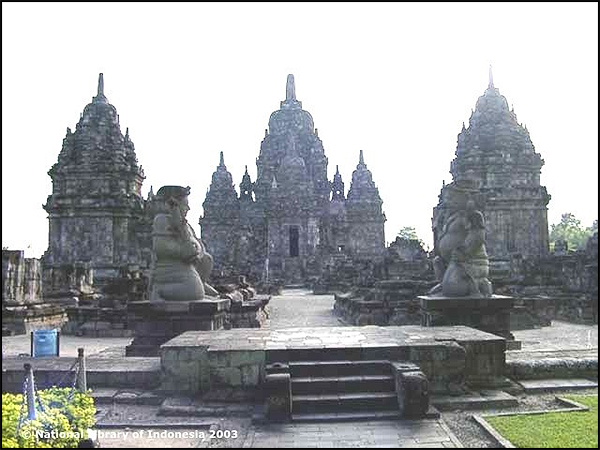
Candi Sewu mempunyai 4 pintu gerbang menuju pelataran luar, yaitu di sisi timur, utara, barat, dan selatan, yang masing-masing dijaga oleh sepasang arca Dwarapala yang saling berhadapan. Dari pelataran luar ke pelataran dalam juga terdapat 4 pintu masuk yang dijaga oleh sepasang arca Dwarapala, serupa dengan yang terdapat di gerbang luar.

Arca Dwarapala yang terbuat dari batu utuh tersebut ditempatkan di atas lapik persegi setinggi sekitar 1,2 m dalam posisi satu kaki berlutut, kaki lainnya ditekuk, dan satu tangan memegang gada. Tinggi arca Dwarapala ini mencapai sekitar 2,3 m.

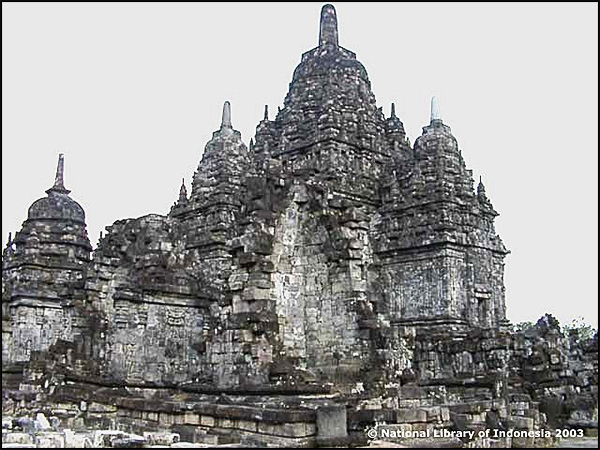
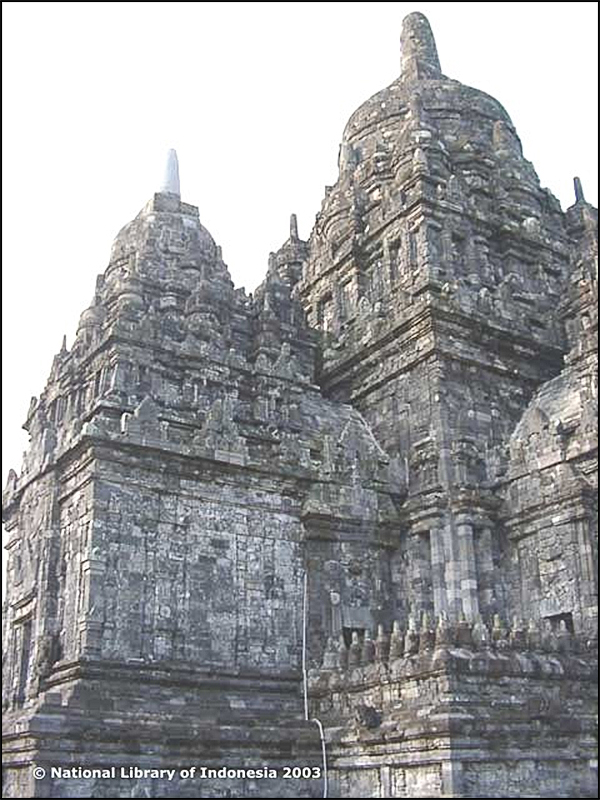
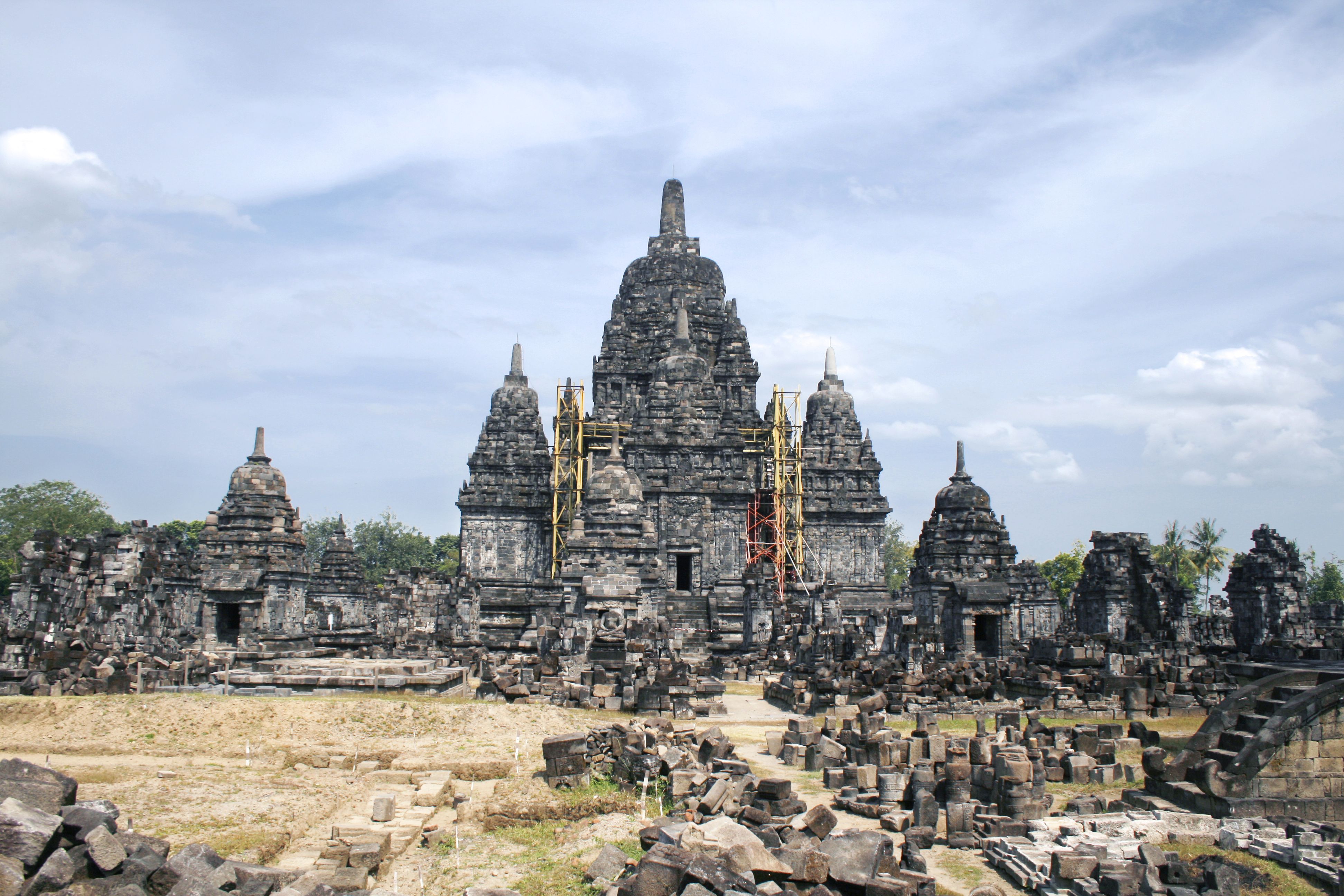
Candi utama atau candi induk terletak di pelataran persegi seluas 40 m2, yang dikelilingi pagar dari susunan batu setinggi 0,85 m. Bangunan candi berbentuk poligon bersudut 20 dengan diameter 29 m. Tinggi bangunan mencapai 30 m dengan 9 atap yang masing-masing mempunyai stupa di puncaknya.


candi sewu pnri04

http://candi.pnri.go.id/jawa_tengah_yogyakarta/sewu/image/BARAT_05230194.jpg


candi sewu pnri05

http://candi.pnri.go.id/jawa_tengah_yogyakarta/sewu/image/SELATAN_05230174.jpg


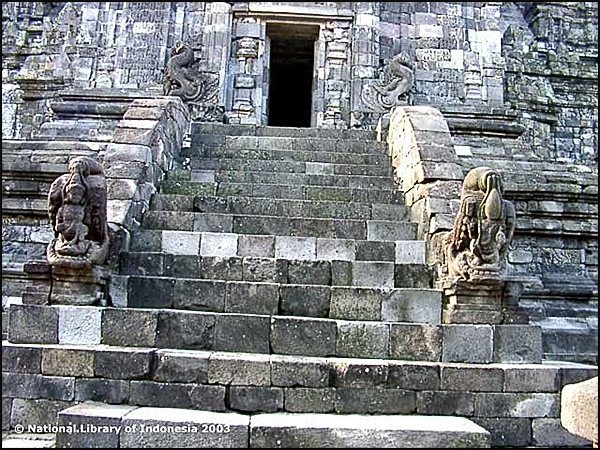
Tubuh candi berdiri di atas batur setinggi sekitar 2,5 m. Kaki candi dihiasi pahatan bermotif bunga dalam jambangan. Untuk mencapai permukaan batur yang membentuk selasar, terdapat tangga selebar sekitar 2 m yang dilengkapi dengan pipi tangga. Pangkal pipi tangga dihiasi makara, kepala naga dengan mulut menganga lebar, dengan arca Buddha di dalamnya. Dinding luar pipi tangga dihiasi pahatan berwujud raksasa Kalpawreksa.


candi sewu pnri06

http://candi.pnri.go.id/jawa_tengah_yogyakarta/sewu/image/SELATAN_05230175.jpg


candi sewu pnri07

http://candi.pnri.go.id/jawa_tengah_yogyakarta/sewu/image/BARAT_05230196.jpg


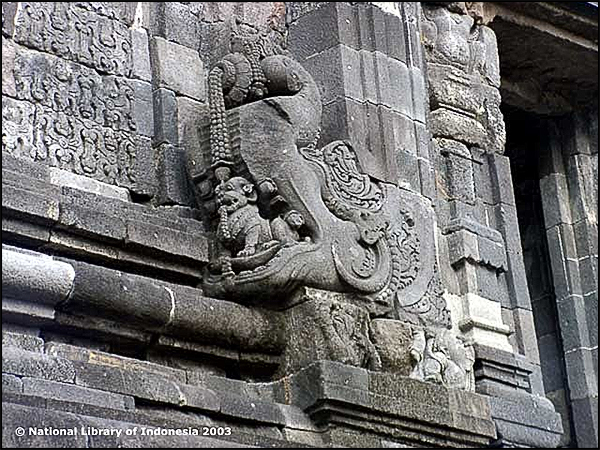
Di atas ambang pintu tidak terdapat Kalamakara, namun dinding di kiri dan kanan ambang pintu dihiasi pahatan kepala naga dengan mulut menganga. Berbeda dari yang terdapat di pangkal pipi tangga, bukan Buddha yang terdapat dalam mulut naga, melainkan seekor singa.

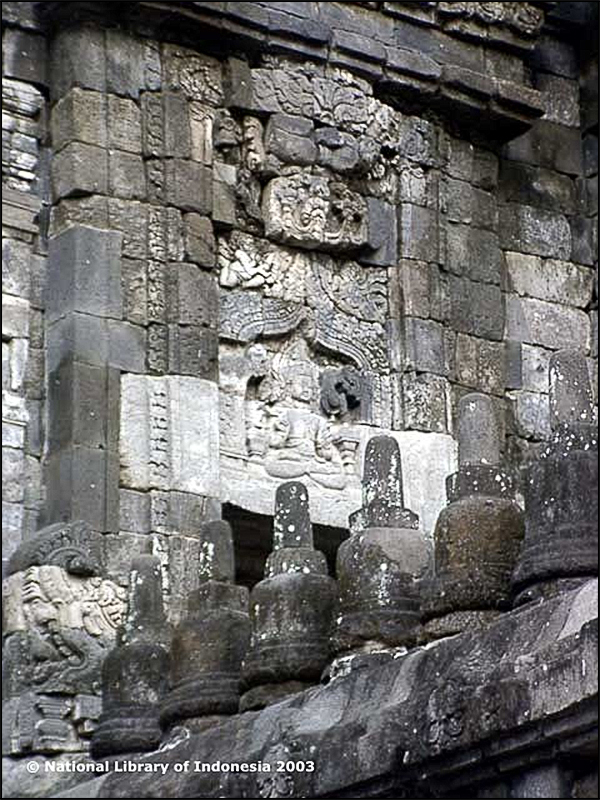
Candi utama yang dibangun dari batu andesit ini mempunyai pintu utama di sebelah timur, sehingga dapat dikatakan bahwa candi utama ini menghadap ke timur. Selain pintu utama, terdapat 3 pintu lain, yaitu yang menghadap ke utara, barat dan selatan. Semua pintu masuk dilengkapi dengan bilik penampil. Ruang dalam tubuh candi berbentuk kubus dengan dinding terbuat dari susunan bata merah. Di dalam ruangan ini terdapat sebuah 'asana'. Pada dinding luar tubuh dan kaki atap candi terdapat relung-relung berisi arca Buddha dalam berbagai posisi.


candi sewu pnri08

http://candi.pnri.go.id/jawa_tengah_yogyakarta/sewu/image/BARAT_SELATAN_05230178.jpg


candi sewu pnri09

http://candi.pnri.go.id/jawa_tengah_yogyakarta/sewu/image/BARAT_05230195.jpg


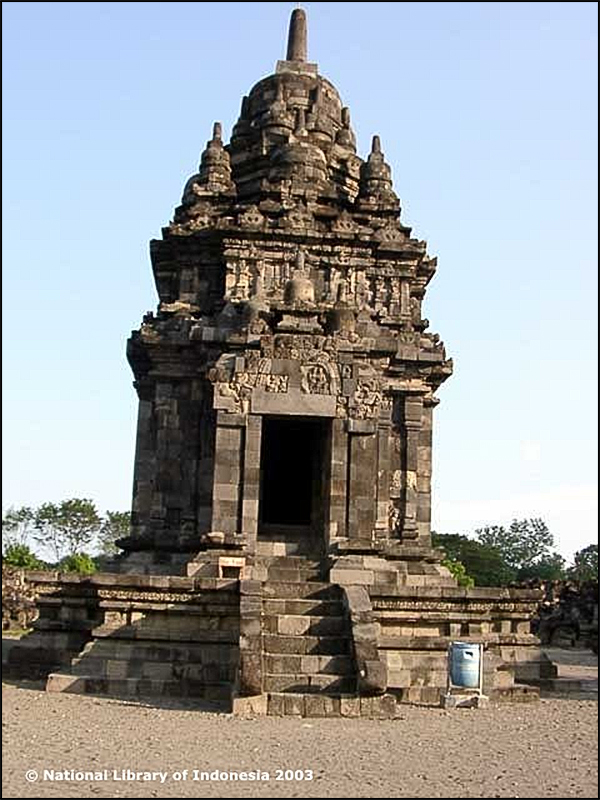
Candi perwara dan candi apit seluruhnya terletak di pelataran luar. Di setiap sisi terdapat sepasang candi apit yang berada di antara candi utama dengan deretan dalam candi perwara. Setiap pasangan candi apit berhadapan mengapit jalan yang membelah halaman menuju ke candi utama.


candi sewu pnri10

http://candi.pnri.go.id/jawa_tengah_yogyakarta/sewu/image/SELATAN_05230185.jpg


candi sewu pnri11

http://candi.pnri.go.id/jawa_tengah_yogyakarta/sewu/image/TMR_CANDI_APIT_UTR_05230189.jpg


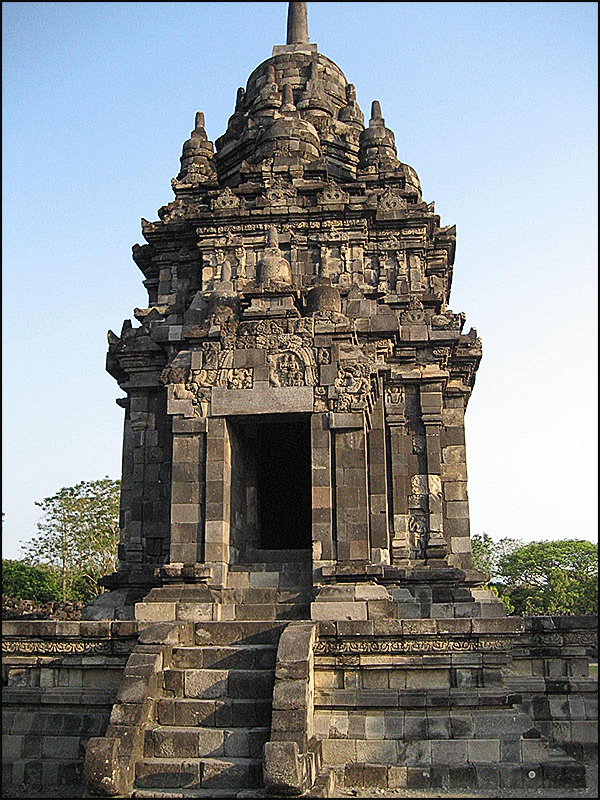
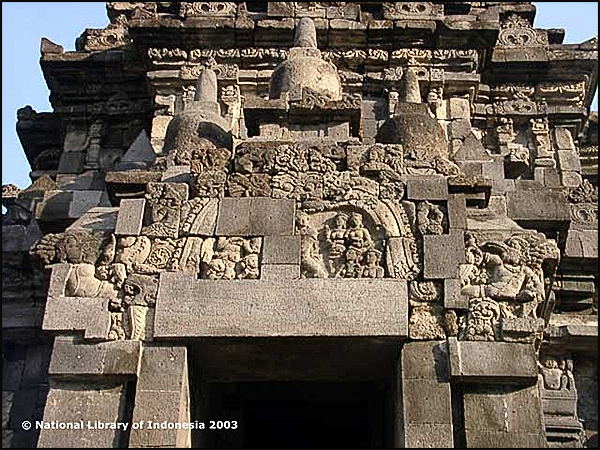
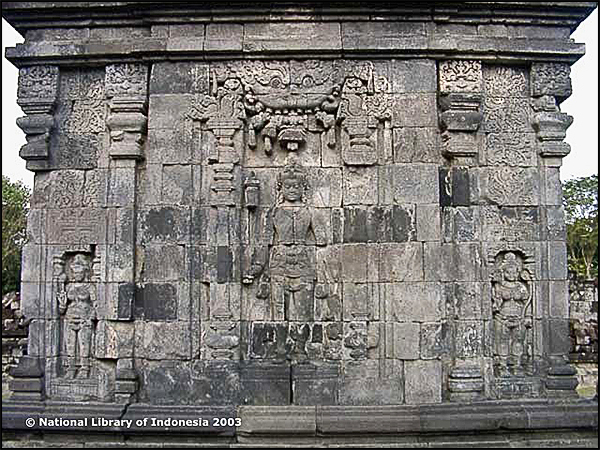
Candi apit berdiri di atas batur setinggi sekitar 1 m, dilengkapi dengan tangga selebar sekitar 1 m menuju ke selasar di permukaan kaki candi. Di atas ambang pintu bukan dihiasi pahatan Kalamakara, melainkan beberapa panil relief. Atap candi berbentuk stupa dengan deretan stupa kecil menghiasi pangkalnya. Dinding tubuh candi apit dihiasi dengan sosok-sosok pria berbusana kebesaran, nampak seperti dewa, dalam posisi berdiri memegang setangaki teratai di tangannya. 


candi sewu pnri12

http://candi.pnri.go.id/jawa_tengah_yogyakarta/sewu/image/TMR_CANDI_APIT_UTR_05230191.jpg


candi sewu pnri13

http://candi.pnri.go.id/jawa_tengah_yogyakarta/sewu/image/CANDI_APIT_05230183.jpg


Candi perwara dibangun masing-masing dalam empat deret di sisi terluar mengelilingi candi utama dan candi apit. Pada deret terdalam terdapat 28 bangunan, deretan kedua terdapat 44 bangunan, deretan ketiga terdapat 80 bangunan, dan deretan ke empat 88 bangunan. Semua candi perwara, kecuali yang berada dalam deretan ketiga, menghadap ke luar atau membelakangi candi utama. Hanya yang berada dalam deretan ketiga yang menghadap ke dalam. Sebagian besar candi perwara dalam keadan rusak, tinggal berupa onggokan batu.


candi sewu pnri14

http://candi.pnri.go.id/jawa_tengah_yogyakarta/sewu/image/UTARA_TIMUR_05230192.jpg


candi sewu pnri14

http://candi.pnri.go.id/jawa_tengah_yogyakarta/sewu/image/UTARA_TIMUR_05230192.jpg


Sumber : http://candi.pnri.go.id/jawa_tengah_yogyakarta/sewu/sewu.htm


Administrative localization:

Bener, Bugisan, Prambanan, Klaten, JT.


Geographical localization:

07° 44' 38.1" S
110° 29' 35.1" E
Precision: 6m
Alt.: 161m


Surroundings:

In lowland, on flat ground,38 some 550m to the east of kali Opak and 350m to the east of one of its branch called kali Ngapan. Sewu is located 300m to the west of Gana, 350m to the northeast of Kulon, 250m to the south of Lor, 1300m to the west southwest of Plaosan Lor, 1200m to the west of Plaosan Kidul and 1000m to the north northeast of Loro Jonggrang.


Religion: Buddhist.
Main features:

Concentric compound; facing east; staggered square with 5 chambers; enclosure walls.
State of preservation:

The main temple was restored from base to superstructure. Most of the secondary shrines are relatively well preserved: at least the base and lower parts of the temple body are still visible. A few of them are still entirely standing. Traces of 6 out of the 8 temples flanking the compound axis can be distinguished. The eastern ones were restored almost to the top. Outer enclosures have disappeared.


Description:

Candi Sewu is a vast compound made of a main temple surrounded by a first enclosure, four rows of secondary shrines and one or two further enclosure walls. It is roughly orientated around the cardinal points.
The east-west temple axis is 88° 09' 07'' from geogrphical north (Anom, Hatmadi 1992: fig.7).39


o The central temple and its courtyard
The central sanctuary is a staggered square. Its base is an impressive square platform (roughly 18m square) with important projections at the centre of each side.40 Access to the platform is possible from the four sides via staircases.
The temple body is a square to which were added four projections, one on each side (the square is 12m x 12; the projections are 7.20m large and deep). The building shelters 9 rooms (1 central cella, 4 secondary rooms and 4 corridors). The central cella faces east and is 5.50m (E-W) x 5.90m (N-S). It is surrounded by a circumambulation path (partly covered, partly open). The four secondary rooms are located on the axis of the building and are 4m x 3.50m. They can be entered either from the circumambulation path or from the courtyard.
The main temple is surrounded by a courtyard measuring 41m (N-S) x 40m (E-W) and bordered by a low stone fence.41 The fence has four gates, one at the centre of each side (although the northern and southern gateways are smaller than the two others). These gateways actually are simple openings within the wall; they are not buildings.42


o Secondary shrines
Directly outside the central courtyard and 38 cm below it, are four rows of secondary shrines and four pairs of axial sanctuaries.43
The first row counts 28 shrines looking outwards (8 on each).44 Their back is almost against the first enclosure. They all have a similar plan. Their base and temple body are square (respectively 6m and 4.20m square) with a projection for the entrance. Lightly projecting niches are to be seen on rear and sidewalls. The trapezoidal cella (1.75m x 1.70m x 1.70m) is preceded by a small vestibule. In the outer niches were carved standing figures.
The second row of secondary shrines is made out of 44 buildings looking outwards (12 on each side). Shrines are different from those of the first row: they are bigger and staggered square. Their base is square (6.30m) with a projection for the entrance. The temple body is a staggered square (4m) with one more important projection on the side of the entrance. Inside, a small vestibule leads to a square cella (1.65m). The rear and side walls of the latter are pierced by one niche.
Between the second and third rows of secondary shrines lies a 25m-wide space. This space is empty, at the exception of 4 pairs of temples located along its axis.45 Each couple is made out of two temples facing each other. Although wider, the plan of those temples bears similarities with that of the shrines of the second and third rows. The base is square (9.30m) with a single projection, on the side of the entrance. On the platform raises a staggered square temple body (5.80m) with a more important projection on the side of the entrance. The temple body houses a central cella (2.30m square) with three niches (one on each wall) preceeded by a deep vestibule.
The third row of secondary shrines is made out of 80 buildings (20 on each side). Contrary to other secondary shrines, all the buildings of the third row are looking inwards. They are similar in plan with shrines of the second row.46
The fourth row is made out of 88 square buildings (22 on each side). They are all looking outwards and are similar in plan with the shrines of the first row.


o Outer enclosure walls
The four rows of secondary shrines were once surrounded by an enclosure wall (not visible anymore).
According to recent excavations the wall would measure 187m (N-S) x 170m (E-W) (Anom, Hatmadi 1992: 61). Unfortunately the state of preservation of this second enclosure was too poor to allow an exact reconstitution.47
In 1983, remains of a wall were discovered 103m to the east of the third enclosure wall of candi Sewu (Anom, Hatmadi. 1992: 61).
It is therefore not unthinkable that, originally, the compound was wider and had four enclosures.
Between those remains and the third enclosure were traces of a stone building (Anom, Hatmadi 1992: 61).


o Architectural history
The complex organization of the main temple of candi Sewu is thought to be due to modifications undergone by the sanctuary at the end of the 8th century (Dumarçay 1981: 21-23). In its initial state, the central base would have supported not one cruciform temple but 5 square shrines (one main shrine in the centre and four smaller ones on the cardinal points).48


Sculptures:
A statue of Aksobhya was found in the southeastern shrine of the second row (IJzerman 1891: fig.153).
In the space between the second and third row, among the remains of the northern temple of the eastern axis was discovered an image of Wairocana (IJzerman 1891: fig.153).
Numerous sculptures were found among the remains of the third row. In the eastern shrines were discovered one Amogasiddhi49 and 6 Amitābha; among the northern shrines three Ratnasambhawa; in the western buildings, one Amitābha50 and two Aksobhya; and, finally, within the southern shrines, one Amitābha and one Amogasiddhi (IJzerman 1891: fig.153).
Sculptures were also discovered within the fourth row: in the eastern shrines 5 Aksobhya;51 to the north 2 Amogasiddhi;52 in the western shrines 2 Amitābha and one Aksobhya; 53 in the south 3 Ratnasambhawa (IJzerman 1891: fig.153).


Inscriptions:
An inscription (Mañjusrīgrha) dated 792 was found next to shrine no 202 (western row, fifth shrine from the south) (Dumarçay 1981: pl. XVI).
Inscription of Kĕlurak dated 782 A.D. (Sarkar 1971: nr 6)
Several short inscriptions above the doors of secondary shrines (early mid 9th century) (Casparis 1950: 113-115).
Three small gold plates (early mid 9th century) (Wisseman Christie 2002-2004: nr 30).


Miscellaneous archaeological finds:
An intriguing feature of the main temple is the structure found underneath the central cella (Anom, Hatmadji 1992: 21-22; Dumarçay 1987: 289-291).
It was indeed discovered that the cella topped a cubic structure distinct from the stones filling the rest of the base. This structure had almost the same dimensions as the cella (5.30m x 5.24m). It was made from 10 layers of adjusted stones and was 1.79m high. Its bottom is at the same level than the floor of the secondary rooms, but instead of being built upon the base, it lies on another independent cubic structure.


Sumber : Candi Space and Landscape - Véronique Myriam Yvonne Degroot


kds penutupwangsul-manginggil

  • < 11 Plaosan Lor
  • 13 Sojiwan >